Learn about our organs and piano
Chancel Organ
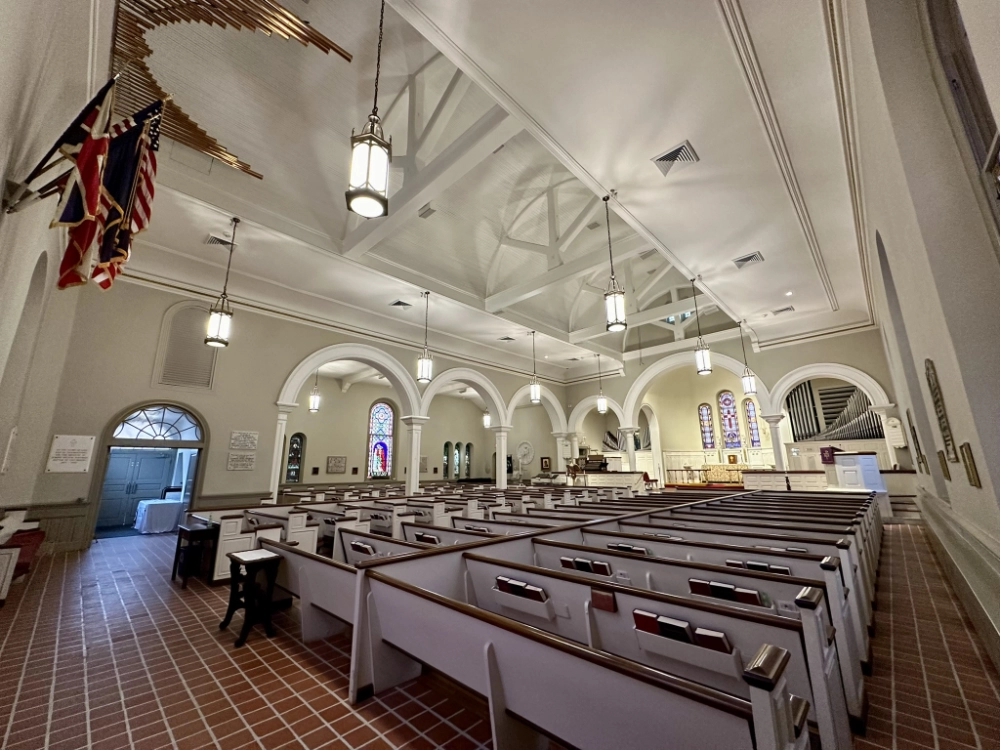
The original portion of our present organ was installed in 1965 by the Austin Organ Company of Hartford, CT, under the watchful eyes and ears of then-Organist & Choirmaster, Frank Libolt. It was originally a modest two-manual and pedal organ, located entirely in the organ chamber to the right of the altar. Every Organist & Choirmaster since then has enlarged or altered the organ. The most significant work was done during the tenure of James E. Derr, who dramatically enlarged the organ by incorporating several ranks of the previous Hook & Hastings organ, installing a new Positiv division to the left of the altar, installing an Antiphonal division in the tower, making significant digital additions including Choir and Solo divisions, and installing a four-manual console to control the organ. Significant alterations and digital additions were also made during the tenure of Jack Levick. Counting the digital portions of the instrument, our organ is the largest church organ in Hampton Roads.
History
of Our Chancel Organs
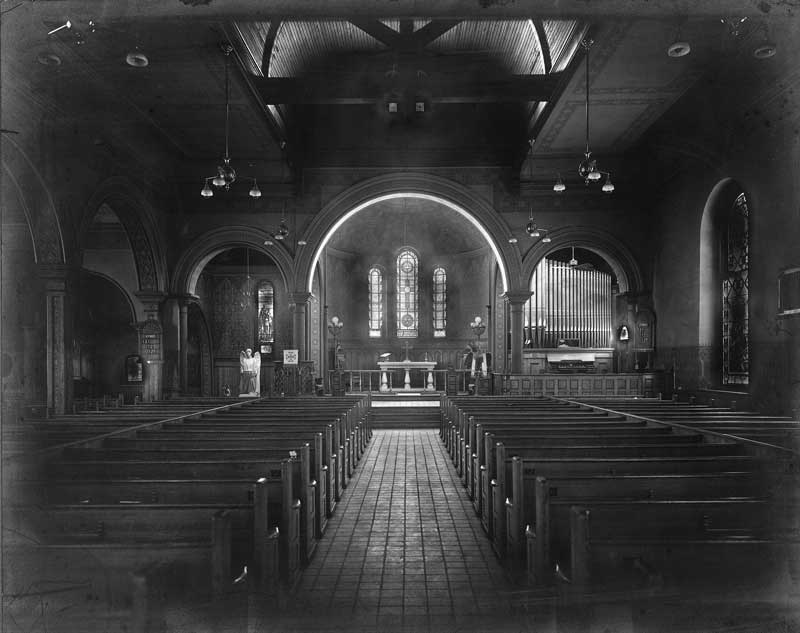
The present chancel organ is at least the fourth pipe organ in our beautiful church since 1762. The first pipe organ specifically mentioned in our church was built in 1845 by Henry Erben of New York City, but the instrument it replaced is unknown. Records of this instrument are scant and sometimes contradictory, but it seems it spent most of its time at Trinity in a rear balcony located beneath the original steeple, where it was often the victim of water damage, but it may have eventually been moved to the chancel. It was replaced in 1898 by a new pipe organ built by E. & G.G. Hook & Hastings of Boston, dedicated in honor of Miss Louisiana Wilson, organist of Trinity Church for 60 years. When the Hook & Hastings was installed, the Erben organ was moved to All Saints Episcopal Church (originally a Mission of Trinity) in the Parkview section of Portsmouth, which closed in 1930. What happened to the Erben after 1930 is unknown.
The 1898 Hook & Hastings was a significant two-manual and pedal instrument, but it was plagued with troubles from its earliest days. One major problem which manifested immediately was insufficient wind pressure, as the organ was blown by mechanism that depended on the city water supply, which provided insufficient power to supply full organ. By the 1940’s, the Hook & Hastings organ and its problems were a frequent topic of discussion for the Vestry. By the 1950’s Trinity had determined the best course of action would be to replace the organ, and solicited several proposals for a new, significant organ in the rear balcony, part of an ambitious remodeling plan that included relocating the choir to the balcony and expanding the chancel. Ultimately, the remodeling was significantly scaled-back, the balcony was removed, and a new chancel organ by the Austin Organ Company was commissioned for the parish’s bicentennial and installed three years later. The Hook & Hastings was rebuilt and relocated to St. Christopher’s Episcopal Church (originally a Mission of Trinity) in the Churchland section of Portsmouth. After several decades, St. Christopher’s decided to remove the organ, and the pipes were salvaged by then-Organist & Choirmaster, James E. Derr, and a team of parishioners. Much of the Hook & Hastings remains in the Parish House attic today.
Chapel Organ
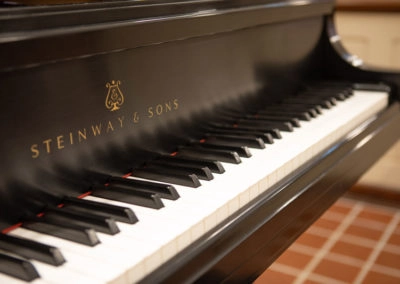
The Nave Piano